

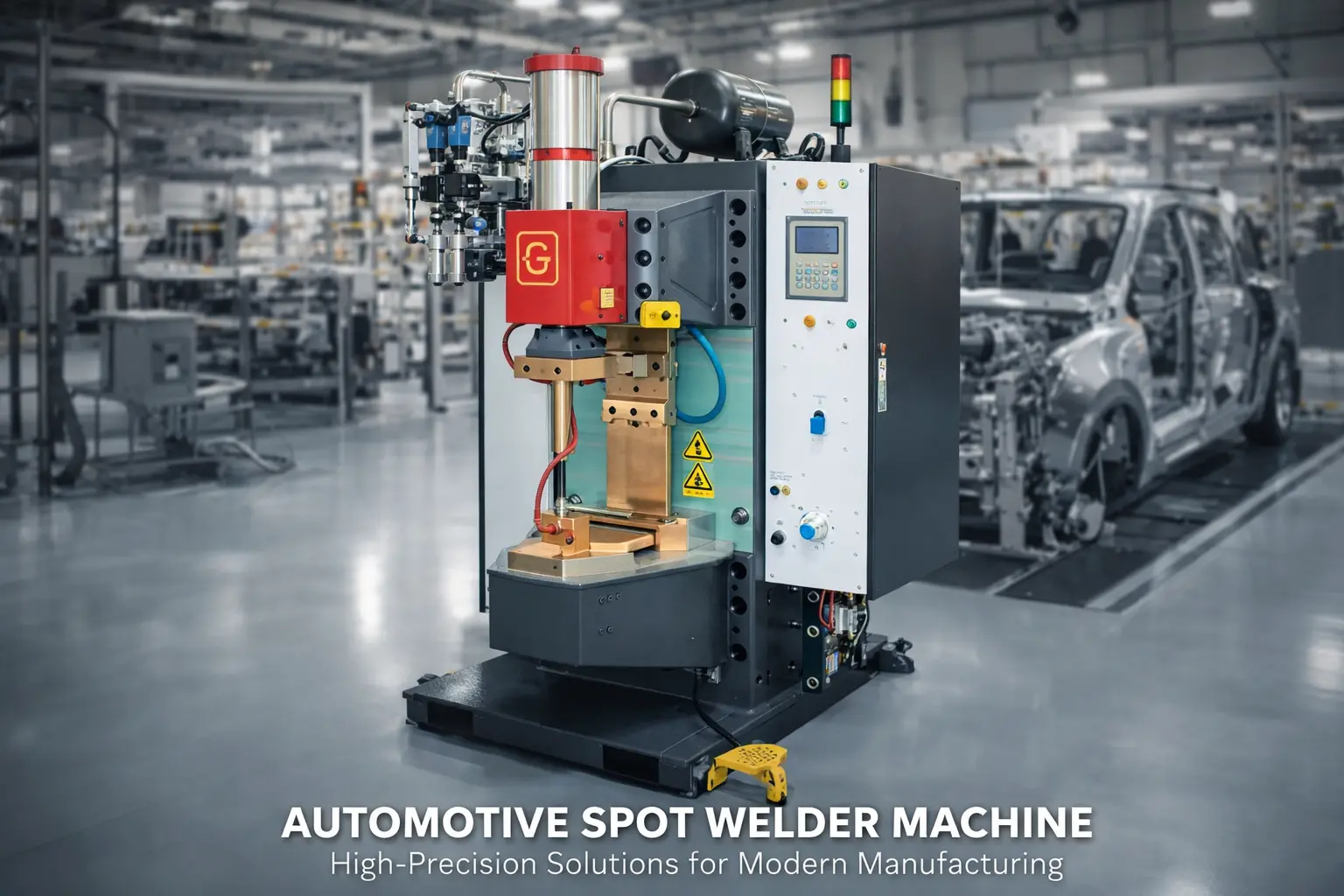

In the fast-paced world of automotive manufacturing, precision, speed, and reliability are non-negotiable. Among the array of metal-joining technologies, the automotive spot welder remains a cornerstone solution for producing durable, high-quality assemblies in vehicle frames, panels, and structural components. Leveraging advanced resistance welding principles, modern spot welding systems enhance productivity while maintaining the exacting standards demanded by OEMs and manufacturing engineers.
In this guide, we will explore the principles, applications, technology trends, and best practices for automotive spot welding, highlighting why partnering with an expert provider like Heron Welder ensures superior performance and production efficiency.
What Is an Automotive Spot Welder?
A spot welder is a type of resistance welding machine that joins two or more metal sheets by applying pressure and passing a high electric current through the contact points. The localized heat generated by the electrical resistance melts the metal at the interface, forming a strong weld nugget upon cooling.
In automotive applications, spot welders are typically used to assemble:
-
Vehicle body panels (doors, hoods, roofs)
-
Chassis frames and subframes
-
Cross-members and structural reinforcements
The key advantages of spot welding in the automotive sector include speed, consistency, minimal material distortion, and compatibility with automated production lines.
How Automotive Spot Welding Works: Principles and Technology
Automotive spot welding relies on two core principles: resistance heating and mechanical pressure. Here’s a breakdown of the process:
-
Clamping – Copper electrodes clamp the metal sheets together, ensuring intimate contact.
-
Current Flow – A precisely controlled high-current pulse flows through the electrodes, generating heat at the contact points.
-
Weld Nugget Formation – Localized melting occurs, creating a molten nugget.
-
Cooling and Solidification – The electrodes maintain pressure as the nugget cools, forming a strong metallurgical bond.
Modern spot welders from Heron Welder incorporate technologies like MFDC (Medium-Frequency Direct Current) control, capacitor discharge, and intelligent welding controllers to ensure precise energy delivery, uniform weld quality, and minimal spatter.
Applications in Automotive Manufacturing
Spot welding is ubiquitous in automotive production due to its efficiency and reliability. Key applications include:
Body-in-White (BIW) Assembly
BIW assembly involves joining sheet metal panels to form the car’s structural skeleton. High-speed robotic spot welding cells equipped with MFDC welders are standard for producing consistent welds with minimal distortion.
Structural Reinforcements
Modern vehicles incorporate high-strength steels and lightweight alloys. Advanced spot welders can handle mixed materials while maintaining weld integrity, crucial for crashworthiness and durability.
Automation Integration
Integrating spot welders into automated production lines allows synchronized operations with conveyors, robotic arms, and quality inspection systems. Heron’s welding solutions support PLC integration, ensuring real-time process monitoring and reporting for traceability.
Advantages of Choosing Modern Automotive Spot Welders
-
High Productivity: Rapid welding cycles increase output without compromising quality.
-
Consistency: Programmable welding parameters ensure repeatable, reliable welds.
-
Material Versatility: Capable of joining a wide range of metals including steel, stainless steel, and aluminum alloys.
-
Reduced Distortion: Localized heating minimizes warping, critical for precise automotive assemblies.
-
Automation-Ready: Designed for robotic cells and automated production lines, reducing manual labor and enhancing safety.
Comparing Spot Welding Technologies
Automotive manufacturers often choose between different spot welding technologies based on production needs:
| Technology | Advantages | Applications |
|---|---|---|
| MFDC Spot Welding | Fast, energy-efficient, precise | High-speed robotic BIW assembly |
| Capacitor Discharge Welding | Short pulses, minimal heat input | Thin metal sheets, aluminum alloys |
| Traditional AC Welders | Robust, cost-effective | Low-volume or maintenance-heavy environments |
Heron Welder offers solutions across all these technologies, providing tailored equipment for specific manufacturing challenges.
Best Practices for Automotive Spot Welding
To maximize efficiency and weld quality, engineers should follow these best practices:
-
Optimize Electrode Maintenance – Worn electrodes increase resistance variation and reduce weld consistency.
-
Control Welding Parameters – Adjust current, pressure, and weld time according to metal type and thickness.
-
Implement Process Monitoring – Use integrated controllers and sensors to detect anomalies in real time.
-
Regular Calibration – Periodic calibration ensures consistent performance, reducing scrap and rework.
-
Safety Measures – Ensure proper grounding, shielding, and operator training for safe operations.
Why Partner with Heron Welder
With decades of experience in industrial welding, Heron Welder provides advanced spot welding solutions designed for the unique challenges of automotive production. Our global offerings include:
-
High-speed MFDC spot welders for robotic BIW lines
-
Capacitor discharge welders for lightweight metals
-
Fully integrated automated welding cells
-
Custom welding guns and controllers for precise control
By leveraging Heron’s expertise, OEMs, factory engineers, and automation integrators gain access to reliable, high-performance welding solutions that reduce downtime, improve quality, and scale with production demands.
FAQs About Automotive Spot Welders
Q1: Can spot welding be used for aluminum panels?
Yes, advanced capacitor discharge and MFDC spot welders can effectively join aluminum while minimizing heat distortion.
Q2: What is the typical weld cycle time for automotive spot welding?
Cycle times vary based on thickness and technology, typically ranging from 0.5 to 3 seconds per weld.
Q3: How does spot welding compare to MIG/TIG welding in automotive production?
Spot welding is faster, more consistent for thin sheets, and better suited for automation, while MIG/TIG is more versatile for complex shapes or thicker materials.
Q4: Can spot welders be integrated into existing robotic production lines?
Yes, Heron’s spot welders support PLC and robotic integration, ensuring seamless automation.
Q5: How do I maintain consistent weld quality?
Regular electrode maintenance, process monitoring, and periodic calibration are key to consistent high-quality welds.
Conclusion
In today’s competitive automotive sector, an automotive spot welder is not just a machine—it’s a critical component of production efficiency, quality assurance, and automation success. Choosing the right technology and partner can dramatically improve output, reduce scrap, and enhance product safety.
Heron Welder is your trusted partner for customized, high-performance welding solutions. From advanced MFDC spot welders to automated production lines, we deliver the expertise and technology to meet the demands of modern automotive manufacturing.
Contact Heron Welder today to request a quote or consult with our specialists for tailored welding and automation solutions designed to maximize your production efficiency.


