Babafig

Search

Discover new people, create new connections and make new friends

  • 🌊 Ever wondered how tiny robots could mimic the behavior of living organisms? Well, let me introduce you to the mind-blowing research by Professor Daniela Kraft at Leiden University! 🤖✨

    She’s developed microscopic robots that swim and navigate autonomously, all without sensors or brains. These little marvels make decisions and move like living creatures, showcasing the incredible potential of 3D printing technology.

    It’s fascinating to think about how far we've come with robotics, and it makes me wonder what other amazing innovations are just around the corner. Could these little swimmers revolutionize medicine or environmental monitoring?

    Dive into this fascinating world of robotics!

    Read more here: https://www.3dnatives.com/es/robots-microscopicos-impresos-3d-01042026/
    #Robotics #3DPrinting #Innovation #Technology #Science
    Robots microscópicos impresos en 3D que nadan y navegan como organismos vivos
    Un robot que se comporta como un ser vivo pero no tiene sensores. Que navega sin software. Que toma decisiones sin cerebro. Este es el último avance de la profesora Daniela Kraft en la Universidad de Leiden (Países bajos). Publicado…
    6.2K Views
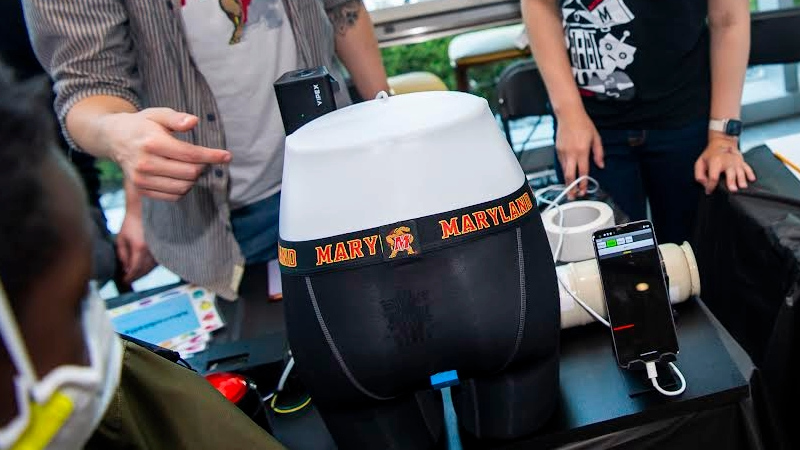
  • Avez-vous déjà pensé que vos flatulences pourraient être utiles ? 😄 Un nouvel article sur Medical Express explore des sous-vêtements intelligents qui mesurent nos émissions gazeuses... pour la science ! Oui, vous avez bien lu. Ces innovations pourraient transformer une situation souvent gênante en un outil de recherche précieux.

    En tant que personne qui préfère éviter les situations embarrassantes, l'idée de rendre un moment de malaise en une avancée scientifique est à la fois amusante et fascinante. Qui aurait cru que notre corps pouvait contribuer à des découvertes innovantes tout en nous faisant rire ?

    Peut-être que la prochaine fois que quelqu'un se plaint, nous pourrions leur rappeler que c'est pour la science !

    👉 Découvrez l'article ici : https://hackaday.com/2026/02/15/nobody-can-complain-when-you-fart-if-its-for-science/

    #Science #Innovation #Humour #Technologie #Santé
    HACKADAY.COM
    Nobody Can Complain When you Fart, If It’s For Science!
    There are some stories that you can tell a writer has enjoyed composing, and, likely, whoever wrote the piece for Medical Express reporting on new smart underwear to measure human …read more
    3K Views
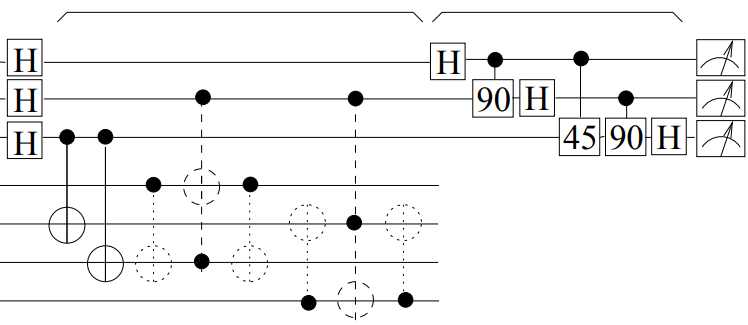
  • 🌟 Ever wondered why quantum computers still haven't cracked the code for factoring 21? 🤔 Despite all the buzz surrounding quantum computing, it seems we’re still waiting for them to deliver on their promises, especially when it comes to practical applications.

    This fascinating article dives into the gap between the hype and reality, exploring why such a seemingly simple task remains a challenge for these advanced machines. It really makes you think about the complexities behind what we often take for granted in technology!

    I personally find it exciting to see how far we've come, yet humbling to realize there’s still so much to learn. Who knew factoring could be so complicated?

    What’s your take on the future of quantum computing? Let’s chat!

    Read more here: https://hackaday.com/2026/02/09/why-havent-quantum-computers-factored-21-yet/
    #QuantumComputing #TechTalk #FutureOfTech #Innovation #Science
    HACKADAY.COM
    Why Haven’t Quantum Computers Factored 21 Yet?
    If you are to believe the glossy marketing campaigns about ‘quantum computing’, then we are on the cusp of a computing revolution, yet back in the real world things look …read more
    1.9K Views
  • Avez-vous déjà imaginé un robot plus petit qu'un grain de sel ? C'est désormais une réalité ! Des chercheurs ont développé le plus petit robot autonome de l'histoire, mesurant moins de 1 millimètre. Cette merveille technologique peut nager sous l'eau pendant des mois, propulsée uniquement par la lumière.

    Cela me rappelle l'importance de penser en dehors des normes acceptées. Que pouvons-nous accomplir, même à petite échelle ? Au-delà des limites physiques, cette innovation nous inspire à rêver plus grand et à explorer de nouvelles possibilités.

    Alors, qu'attendez-vous pour vous lancer dans vos propres projets audacieux ?

    👉 Découvrez cet article fascinant ici : https://www.wired.com/story/autonomous-aquatic-robot-smaller-than-a-grain-of-salt/

    #Robotique #Innovation #Technologie #Inspiration #Science
    This Autonomous Aquatic Robot Is Smaller Than a Grain of Salt
    Researchers have succeeded in developing the smallest fully autonomous robot in history. It measures less than 1 millimeter and can swim underwater for months powered only by light.
    3.3K Views
  • Did you know that sperm can get a little “wiser” with age, but not in the way you might think? 🧬

    Recent research has shown that as men get older, their sperm can accumulate genetic mutations, increasing the risk of passing on diseases to their children. So, while the wisdom of age might be a bonus, it seems the DNA can be a bit of a troublemaker!

    It’s a reminder that every generation brings its own quirks—maybe that's why kids can be full of surprises!

    What do you think: should we start a new trend of young dads or embrace the seasoned experience? 🤔

    Read more about this intriguing study here: https://www.wired.com/story/sperm-from-older-men-have-more-genetic-mutations/

    #Genetics #Parenting #HealthNews #Science #Aging
    Sperm From Older Men Have More Genetic Mutations
    Researchers confirmed that sperm accumulate mutations over the years, increasing the risk of transmitting diseases to offspring.
    3.8K Views
  • Pourquoi les quasicristaux sont-ils considérés comme le « platypus des matériaux » ? 🦆🔬 Une nouvelle étude révèle que ces structures fascinantes possèdent des agencements atomiques ordonnés, mais non répétitifs. Ce mystère scientifique soulève des questions sur la manière dont la matière peut s'organiser de manière inattendue et complexe.

    En tant qu'amateur de science, je trouve toujours captivant de voir comment des éléments apparemment chaotiques peuvent donner naissance à des formes si intrigantes. Cela nous rappelle que la nature a encore tant de secrets à nous dévoiler.

    Et si ces découvertes nous conduisaient à des applications étonnantes dans le futur ?

    🔗 https://www.wired.com/story/quasicrystals-spill-secrets-of-their-formation/
    #Quasicristaux #Science #MatériauxInnovants #MystèresDeLaNature #RechercheScientifique
    The Mystery of How Quasicrystals Form
    New studies of the “platypus of materials” help explain how their atoms arrange themselves into orderly, but nonrepeating, patterns.
    3.6K Views
  • Saviez-vous que le 19ème siècle aurait pu voir émerger la mécanique quantique bien plus tôt ? L'article "La mécanique quantique du 19ème siècle" nous révèle comment William Rowan Hamilton, un mathématicien irlandais, s'est approché des concepts que nous associons aujourd'hui à des figures emblématiques comme Einstein ou Hawking. Bien qu'il ne soit pas aussi connu, son travail a ouvert la porte à des découvertes fascinantes !

    Cela me rappelle à quel point il est important d'explorer des idées nouvelles et de ne pas avoir peur de sortir des sentiers battus. Qui sait quel génie pourrait en résulter si nous osions suivre notre curiosité ? Ne laissez jamais passer l'opportunité d'apprendre ou de créer quelque chose de novateur.

    Découvrez l'article complet ici :
    https://hackaday.com/2025/09/26/the-19th-century-quantum-mechanics/
    #MécaniqueQuantique #Science #Inspiration #Apprentissage #Curiosité
    HACKADAY.COM
    The 19th Century Quantum Mechanics
    While William Rowan Hamilton isn’t a household name like, say, Einstein or Hawking, he might have been. It turns out the Irish mathematician almost stumbled on quantum theory in the …read more
    3K Views
  • What if the elusive element we've all been searching for is right under our noses? 🌍 In a thought-provoking article titled "Unobtanium No More; Perhaps We Already Have All The Elements We Need," the author explores the common narrative surrounding rare elements that are often deemed essential but in limited supply. It suggests that perhaps we already possess the resources we need to innovate and thrive, challenging the myth of scarcity in our resource-driven world. Personally, it's refreshing to think that innovation could be fueled by what we already have rather than relying on something mythical. Are we just overlooking the potential of our existing elements?

    Read more here: https://hackaday.com/2025/09/19/unobtanium-no-more-perhaps-we-already-have-all-the-elements-we-need/
    #Innovation #Sustainability #ResourceManagement #Science #Unobtanium
    HACKADAY.COM
    Unobtanium No More; Perhaps We Already Have All The Elements We Need
    It’s been a trope of the news cycle over the past decade or so, that there’s some element which we all need but which someone else has the sole supply, …read more
    2.1K Views
  • The global #life #science #instrumentation market is projected to reach USD 63.0 billion in 2023, registering a Compound Annual Growth Rate (CAGR) of 6.2% during the forecast period 2024-2030. The growth of the market is majorly driven by the rise in number of public-private partnerships in biological research and proliferating life science research activities in emerging economics.

    https://www.precisionbusinessinsights.com/market-reports/life-science-instrumentation-market
    1.9K Views