• BIA : par quoi commencer avec des lycéens qui n'ont aucune culture aéronautique ?


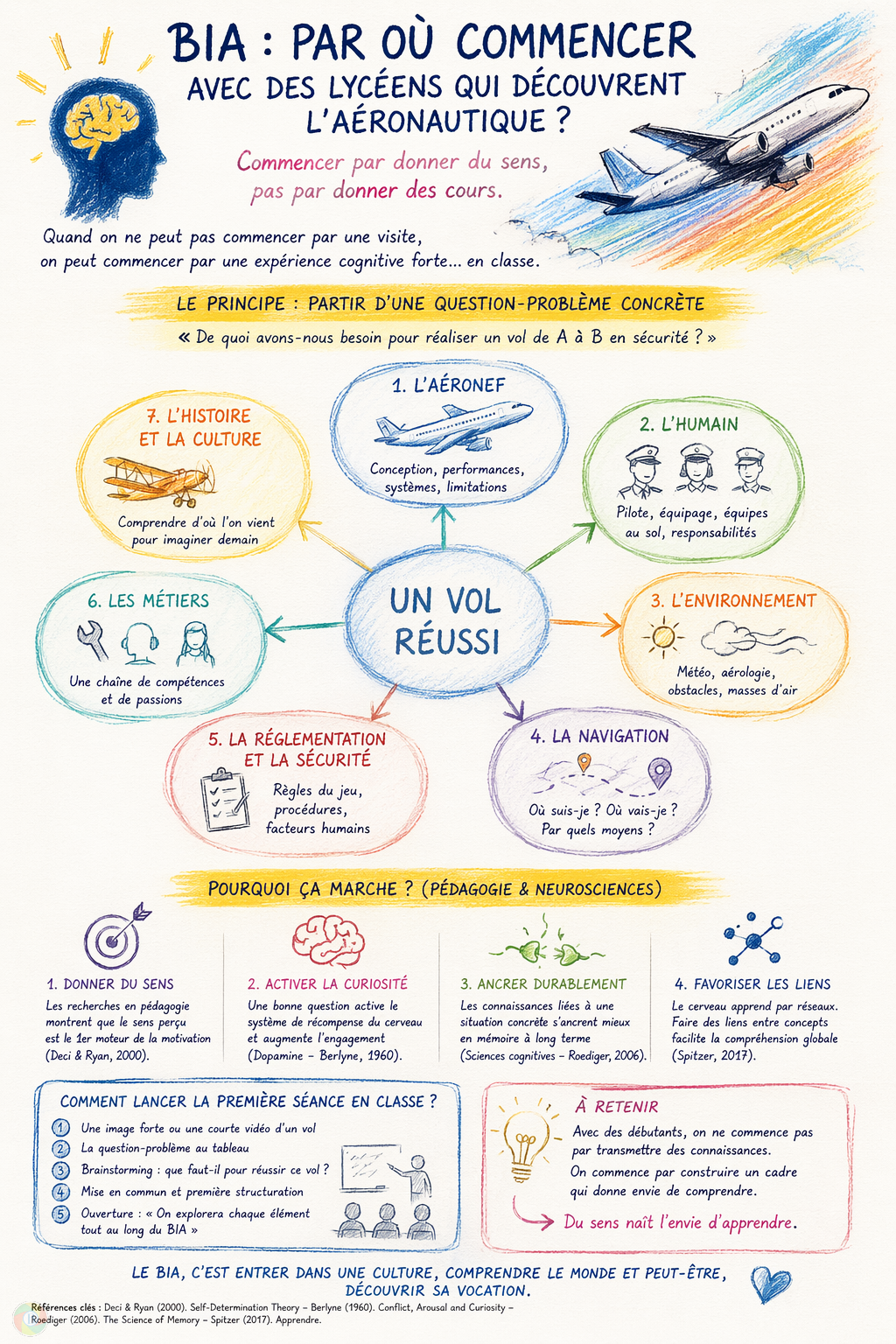
    Quand on débute le BIA, une erreur fréquente consiste à commencer par un empilement de notions : portance, traînée, réglementation, météo, navigation...

    Pour des élèves novices, ce n'est pas toujours le meilleur point d'entrée.


    Le BIA a justement été conçu comme une initiation pluridisciplinaire à la culture aéronautique et spatiale, pour donner du sens aux apprentissages, faire découvrir un univers technique et ouvrir vers les métiers. (éduscol STI)


    À ce titre, ma conviction est simple :


    on ne devrait pas commencer par les chapitres ; on devrait commencer par une situation de vol.


    Par exemple, en classe :

    “Un avion doit partir de La Réunion et arriver à destination en sécurité. De quoi a-t-on besoin ?”


    Cette entrée change tout.


    Elle capte d'abord l'attention, ce qui est l'un des grands leviers de l'apprentissage identifiés par les neurosciences cognitives. Elle favorise aussi l'engagement actif : l'élève ne reçoit pas seulement un savoir, il commence à raisonner sur une situation concrète. (Collège de France)


    Sur le plan pédagogique, cette approche permet aussi de réduire la charge cognitive inutile : au lieu de présenter d'emblée des notions isolées, on les organise autour d'un scénario simple. Les recherches synthétisées par l'EEF montrent l'intérêt de stratégies comme le chunking, les worked examples et le double codage pour aider les novices à comprendre et mémoriser.


    Concrètement, une première séance BIA en classe peut s'appuyer sur cinq appuis très simples :


    ✈️ une photo ou un schéma d'avion, pour donner un premier repère visuel ;


    🧭 une trajectoire simple, pour introduire l'idée de déplacement et de navigation ;


    🌦️ une météo élémentaire, pour faire comprendre l'influence de l'environnement ;


    🛡️ quelques contraintes de sécurité, pour montrer qu'un vol s'inscrit dans un cadre rigoureux ;


    👨‍🏫 une mise en commun orale guidée par l'enseignant, pour structurer les premières représentations des élèves.


    À partir d'une seule situation, les élèves comprennent qu'un vol mobilise :

    un aéronef, une préparation, une météo, une navigation, des règles, des vérifications, des métiers.


    Et c'est précisément là que le BIA devient puissant :

    on ne donne pas seulement des connaissances à apprendre,

    on construit une vision d'ensemble.


    Ensuite seulement, les grands domaines du BIA prennent naturellement leur place :

    aérodynamique, météorologie, navigation, sécurité, histoire, culture aéronautique.


    En résumé, avec des débutants, la bonne question n'est peut-être pas :


    “Quel chapitre faire en premier ?”


    Mais plutôt :


    “Quelle situation concrète va donner envie de comprendre tout le reste ?”
    BIA : par quoi commencer avec des lycéens qui n'ont aucune culture aéronautique ?Quand on débute le BIA, une erreur fréquente consiste à commencer par un empilement de notions : portance, traînée, réglementation, météo, navigation...Pour des élèves novices, ce n'est pas toujours le meilleur point d'entrée.Le BIA a justement été conçu comme une initiation pluridisciplinaire à la culture aéronautique et spatiale, pour donner du sens aux apprentissages, faire découvrir un univers technique et ouvrir vers les métiers. (éduscol STI)À ce titre, ma conviction est simple :on ne devrait pas commencer par les chapitres ; on devrait commencer par une situation de vol.Par exemple, en classe :“Un avion doit partir de La Réunion et arriver à destination en sécurité. De quoi a-t-on besoin ?”Cette entrée change tout.Elle capte d'abord l'attention, ce qui est l'un des grands leviers de l'apprentissage identifiés par les neurosciences cognitives. Elle favorise aussi l'engagement actif : l'élève ne reçoit pas seulement un savoir, il commence à raisonner sur une situation concrète. (Collège de France)Sur le plan pédagogique, cette approche permet aussi de réduire la charge cognitive inutile : au lieu de présenter d'emblée des notions isolées, on les organise autour d'un scénario simple. Les recherches synthétisées par l'EEF montrent l'intérêt de stratégies comme le chunking, les worked examples et le double codage pour aider les novices à comprendre et mémoriser. Concrètement, une première séance BIA en classe peut s'appuyer sur cinq appuis très simples :✈️ une photo ou un schéma d'avion, pour donner un premier repère visuel ;🧭 une trajectoire simple, pour introduire l'idée de déplacement et de navigation ;🌦️ une météo élémentaire, pour faire comprendre l'influence de l'environnement ;🛡️ quelques contraintes de sécurité, pour montrer qu'un vol s'inscrit dans un cadre rigoureux ;👨‍🏫 une mise en commun orale guidée par l'enseignant, pour structurer les premières représentations des élèves.À partir d'une seule situation, les élèves comprennent qu'un vol mobilise :un aéronef, une préparation, une météo, une navigation, des règles, des vérifications, des métiers.Et c'est précisément là que le BIA devient puissant :on ne donne pas seulement des connaissances à apprendre,on construit une vision d'ensemble.Ensuite seulement, les grands domaines du BIA prennent naturellement leur place :aérodynamique, météorologie, navigation, sécurité, histoire, culture aéronautique.En résumé, avec des débutants, la bonne question n'est peut-être pas :“Quel chapitre faire en premier ?”Mais plutôt :“Quelle situation concrète va donner envie de comprendre tout le reste ?”

    J'adore
    1
    1 Commentarii 0 Distribuiri 1K Views 0 previzualizare
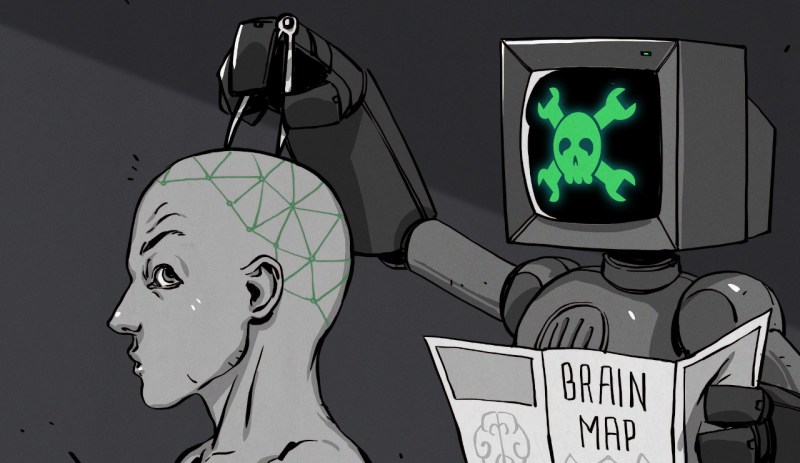
  • Ever wonder how we make decisions and process information? 🤔 The article "Reverse-Engineering Human Cognition and Decision Making in a Modern Age" dives deep into the complexities of our cognitive processes. It highlights how we often overlook these mechanisms until we face challenges, yet they are constantly at work, helping us interpret sensory information and respond accordingly.

    It’s fascinating to think about how our brains are like sophisticated computers, constantly analyzing and reacting to the world around us. I mean, think about the last time you had to make a tough choice—your brain was running a whole analysis behind the scenes!

    This exploration serves as a reminder of the intricate workings of our minds and the importance of understanding them better. How well do you know your own decision-making process?

    Check out the full article here:
    https://hackaday.com/2026/04/13/the-use-of-llm-chatbots-and-human-cognitive-surrender/

    #Cognition #DecisionMaking #HumanMind #Psychology #Neuroscience
    Ever wonder how we make decisions and process information? 🤔 The article "Reverse-Engineering Human Cognition and Decision Making in a Modern Age" dives deep into the complexities of our cognitive processes. It highlights how we often overlook these mechanisms until we face challenges, yet they are constantly at work, helping us interpret sensory information and respond accordingly. It’s fascinating to think about how our brains are like sophisticated computers, constantly analyzing and reacting to the world around us. I mean, think about the last time you had to make a tough choice—your brain was running a whole analysis behind the scenes! This exploration serves as a reminder of the intricate workings of our minds and the importance of understanding them better. How well do you know your own decision-making process? Check out the full article here: https://hackaday.com/2026/04/13/the-use-of-llm-chatbots-and-human-cognitive-surrender/ #Cognition #DecisionMaking #HumanMind #Psychology #Neuroscience
    HACKADAY.COM
    Reverse-Engineering Human Cognition and Decision Making in a Modern Age
    Cognitive processes are not something that we generally pay much attention to until something goes wrong, but they cover the entire scope of us ingesting sensory information, the processing and …read more
    0 Commentarii 0 Distribuiri 458 Views 0 previzualizare
  • Ever wondered what life is like with a brain implant? 🤔 Rodney Gorham has been using a Synchron brain-computer interface for five years, and his journey is nothing short of fascinating! From exploring new ways to communicate to unlocking unique possibilities for those with ALS, Rodney's experiences challenge our understanding of technology and the human mind.

    Imagine having the ability to control devices with just your thoughts—this could revolutionize how we interact with the world around us. If you're interested in cutting-edge tech or the future of medicine, this article is a must-read!

    What innovative technologies do you think could enhance our daily lives?

    Read more here: https://www.wired.com/story/synchron-brain-computer-interface-five-years-als/

    #BrainTech #Innovation #FutureOfMedicine #Neuroscience #AssistiveTechnology
    Ever wondered what life is like with a brain implant? 🤔 Rodney Gorham has been using a Synchron brain-computer interface for five years, and his journey is nothing short of fascinating! From exploring new ways to communicate to unlocking unique possibilities for those with ALS, Rodney's experiences challenge our understanding of technology and the human mind. Imagine having the ability to control devices with just your thoughts—this could revolutionize how we interact with the world around us. If you're interested in cutting-edge tech or the future of medicine, this article is a must-read! What innovative technologies do you think could enhance our daily lives? Read more here: https://www.wired.com/story/synchron-brain-computer-interface-five-years-als/ #BrainTech #Innovation #FutureOfMedicine #Neuroscience #AssistiveTechnology
    What It’s Like to Have a Brain Implant for 5 Years
    No one has had a Synchron brain-computer interface longer than Rodney Gorham. He’s still finding new ways to use it.
    0 Commentarii 0 Distribuiri 664 Views 0 previzualizare
  • brain implant, Synchron brain-computer interface, neurotechnology, brain-computer interface experiences, Rodney Gorham, advancements in neuroscience, neuroprosthetics, cognitive enhancement, brain implant technology

    ## Introduction: A New Frontier in Neurotechnology

    As the field of neurotechnology continues to evolve at an unprecedented pace, the concept of brain-computer interfaces (BCIs) has transitioned from the realm of science fiction into tangible reality. Among the pioneers of this tech...
    brain implant, Synchron brain-computer interface, neurotechnology, brain-computer interface experiences, Rodney Gorham, advancements in neuroscience, neuroprosthetics, cognitive enhancement, brain implant technology ## Introduction: A New Frontier in Neurotechnology As the field of neurotechnology continues to evolve at an unprecedented pace, the concept of brain-computer interfaces (BCIs) has transitioned from the realm of science fiction into tangible reality. Among the pioneers of this tech...
    What It’s Like to Have a Brain Implant for 5 Years: Insights from Rodney Gorham
    brain implant, Synchron brain-computer interface, neurotechnology, brain-computer interface experiences, Rodney Gorham, advancements in neuroscience, neuroprosthetics, cognitive enhancement, brain implant technology ## Introduction: A New Frontier in Neurotechnology As the field of neurotechnology continues to evolve at an unprecedented pace, the concept of brain-computer interfaces (BCIs)...
    0 Commentarii 0 Distribuiri 481 Views 0 previzualizare
  • Ever found yourself binge-watching another season of your favorite show instead of tackling that looming deadline? You’re not alone! 🛋️📺

    Recent research reveals that procrastination isn't just a habit—it may stem from a specific neural circuit in our brains. Scientists have even found a way to disrupt this circuit using a drug, which could change our understanding of why we delay certain tasks.

    It’s fascinating (and a little comforting) to think that our brains might be playing tricks on us, making our couch feel more appealing than our to-do list! Next time you find yourself avoiding that important project, remember—your brain might just be in on the procrastination party!

    Curious to learn more? Check out the full article here:
    https://www.wired.com/story/neuroscience-procrastination-brain-mechanism-task-avoidance/

    #Procrastination #Neuroscience #BrainScience #TaskAvoidance #MindOverMatter
    Ever found yourself binge-watching another season of your favorite show instead of tackling that looming deadline? You’re not alone! 🛋️📺 Recent research reveals that procrastination isn't just a habit—it may stem from a specific neural circuit in our brains. Scientists have even found a way to disrupt this circuit using a drug, which could change our understanding of why we delay certain tasks. It’s fascinating (and a little comforting) to think that our brains might be playing tricks on us, making our couch feel more appealing than our to-do list! Next time you find yourself avoiding that important project, remember—your brain might just be in on the procrastination party! Curious to learn more? Check out the full article here: https://www.wired.com/story/neuroscience-procrastination-brain-mechanism-task-avoidance/ #Procrastination #Neuroscience #BrainScience #TaskAvoidance #MindOverMatter
    Neuroscientists Decipher Procrastination: A Brain Mechanism Explains Why People Leave Certain Tasks for Later
    New research has discovered that a neural circuit may explain procrastination. Scientists were able to disrupt this connection using a drug.
    0 Commentarii 0 Distribuiri 2K Views 0 previzualizare
  • EEG, extrasensory perception, brain waves, Cerelog-ESP-EEG, technology innovation, neuroscience, ESP32

    ---

    ## Unlocking the Potential of EEG: A Deeper Dive into Cerelog-ESP-EEG

    In recent years, the exploration of brainwave activity through electroencephalography (EEG) has garnered significant attention, leading to groundbreaking advancements in neuroscience and technology. While discussions surrounding extrasensory perception (ESP) often invoke a sense of mystique and curiosity, the intersect...
    EEG, extrasensory perception, brain waves, Cerelog-ESP-EEG, technology innovation, neuroscience, ESP32 --- ## Unlocking the Potential of EEG: A Deeper Dive into Cerelog-ESP-EEG In recent years, the exploration of brainwave activity through electroencephalography (EEG) has garnered significant attention, leading to groundbreaking advancements in neuroscience and technology. While discussions surrounding extrasensory perception (ESP) often invoke a sense of mystique and curiosity, the intersect...
    ESP with EEG: No, Not That ESP!
    EEG, extrasensory perception, brain waves, Cerelog-ESP-EEG, technology innovation, neuroscience, ESP32 --- ## Unlocking the Potential of EEG: A Deeper Dive into Cerelog-ESP-EEG In recent years, the exploration of brainwave activity through electroencephalography (EEG) has garnered significant attention, leading to groundbreaking advancements in neuroscience and technology. While discussions...
    0 Commentarii 0 Distribuiri 2K Views 0 previzualizare
  • Formation certifiante Pleine conscience Noua
    195.00€
    In stock
    Internet
    0 previzualizare
    PLEINE CONSCIENCE
    Formation en ligne

    LA PLEINE CONSCIENCE : C'EST QUOI ?
    Cultiver le moment présent, l'acceptation, le non-jugement et la bienveillance

    La pleine conscience (Mindfulness en anglais) est une approche thérapeutique qui est née de la rencontre de deux mondes : d’un côté la sagesse ancestrale orientale avec ses pratiques méditatives et ses états d’expansion de conscience et de l’autre, le monde scientifique avec notamment la psychologie et les neurosciences.

    L’alliance entre la Tradition orientale et le monde scientifique a permis de créer un programme de réduction du stress sur huit semaines.

    L’apprentissage de la pleine conscience est un parcours initiatique qui élargit le champs de conscience et permet d’accueillir dans la bienveillance et le non-jugement les émotions, les évènements et tout ce que la vie place sur notre chemin.

    C’est une thérapie anti-stress qui permet de traverser plus sereinement les périodes difficiles et de savourer pleinement le moment présent.

    Cette approche a de très nombreux bienfaits sur la santé : diminution des troubles anxieux, prévention de la dépression et augmentation de l’estime et de la confiance en soi.

    1- La formation en ligne de pleine conscience est ouverte à tous, débutant ou déjà un professionnel

    2- Un accès illimité et à vie pour vous former selon votre emploi du temps et à votre rythme 24h/24 et 7j/7
    3- Une plateforme de formation en ligne ergonomique avec un tableau de bord pour suivre votre progression

    4- Un enseignement de haute qualité écrit par des experts de la Pleine Conscience

    5- Une formation complète de 21 modules : support écrit, 6 heures de vidéos, 7 méditations guidées Mp3, évaluation à chaque module, examen et certification
    6- Un manuel de formation de 270 pages à télécharger au format PDF

    7- En libre téléchargement : 8 diaporamas PowerPoint pour animer vos séances de pleine conscience

    8- Une évaluation à chaque module pour intégrer et valider vos connaissances au fur et à mesure

    9- Un forum privé pour échanger avec un formateur et les autres étudiants

    10- Une certification internationale de « Coach Pleine Conscience » agréée par l’International Practitioners of Holistic Medicine (IPHM)

    Le tarif inclut la totalité de la formation soit les 21 modules, le forum privé, les évaluations à chaque module, l’examen et l’envoi de la certification au format PDF. Garantie satisfait ou remboursé de 7 jours – Paiement sécurisé CB ou PayPal

    Prix 390 € I Remise -50 % : 195 € ou 3 x 69 €

    Accédez à la formation: https://bit.ly/3wkCgjd


    PLEINE CONSCIENCE Formation en ligne LA PLEINE CONSCIENCE : C'EST QUOI ? Cultiver le moment présent, l'acceptation, le non-jugement et la bienveillance La pleine conscience (Mindfulness en anglais) est une approche thérapeutique qui est née de la rencontre de deux mondes : d’un côté la sagesse ancestrale orientale avec ses pratiques méditatives et ses états d’expansion de conscience et de l’autre, le monde scientifique avec notamment la psychologie et les neurosciences. L’alliance entre la Tradition orientale et le monde scientifique a permis de créer un programme de réduction du stress sur huit semaines. L’apprentissage de la pleine conscience est un parcours initiatique qui élargit le champs de conscience et permet d’accueillir dans la bienveillance et le non-jugement les émotions, les évènements et tout ce que la vie place sur notre chemin. C’est une thérapie anti-stress qui permet de traverser plus sereinement les périodes difficiles et de savourer pleinement le moment présent. Cette approche a de très nombreux bienfaits sur la santé : diminution des troubles anxieux, prévention de la dépression et augmentation de l’estime et de la confiance en soi. 1- La formation en ligne de pleine conscience est ouverte à tous, débutant ou déjà un professionnel 2- Un accès illimité et à vie pour vous former selon votre emploi du temps et à votre rythme 24h/24 et 7j/7 3- Une plateforme de formation en ligne ergonomique avec un tableau de bord pour suivre votre progression 4- Un enseignement de haute qualité écrit par des experts de la Pleine Conscience 5- Une formation complète de 21 modules : support écrit, 6 heures de vidéos, 7 méditations guidées Mp3, évaluation à chaque module, examen et certification 6- Un manuel de formation de 270 pages à télécharger au format PDF 7- En libre téléchargement : 8 diaporamas PowerPoint pour animer vos séances de pleine conscience 8- Une évaluation à chaque module pour intégrer et valider vos connaissances au fur et à mesure 9- Un forum privé pour échanger avec un formateur et les autres étudiants 10- Une certification internationale de « Coach Pleine Conscience » agréée par l’International Practitioners of Holistic Medicine (IPHM) Le tarif inclut la totalité de la formation soit les 21 modules, le forum privé, les évaluations à chaque module, l’examen et l’envoi de la certification au format PDF. Garantie satisfait ou remboursé de 7 jours – Paiement sécurisé CB ou PayPal Prix 390 € I Remise -50 % : 195 € ou 3 x 69 € Accédez à la formation: https://bit.ly/3wkCgjd
    Tags produits
    #formation, #pleineconscience
    Préférences de livraison
    Livraison (Poste, transporteur)
    Disponibilité
    Article en stock
    J'adore
    2
    0 Commentarii 0 Distribuiri 23K Views 0 previzualizare
ADS Jbcois
Babafig https://www.babafig.com